
Which receipts and invoices you must keep, for how long, and in what form
Every quarter, bags of receipts travel to gestorías across Marbella. Some of them are needed, some are not, and all of them have a legal retention period. Here is the rule.
- Autor
- Editorial team
- Authorship to be confirmed
- Published:
- 1 October 2026
- Updated:
- 1 October 2026
- 2 min read
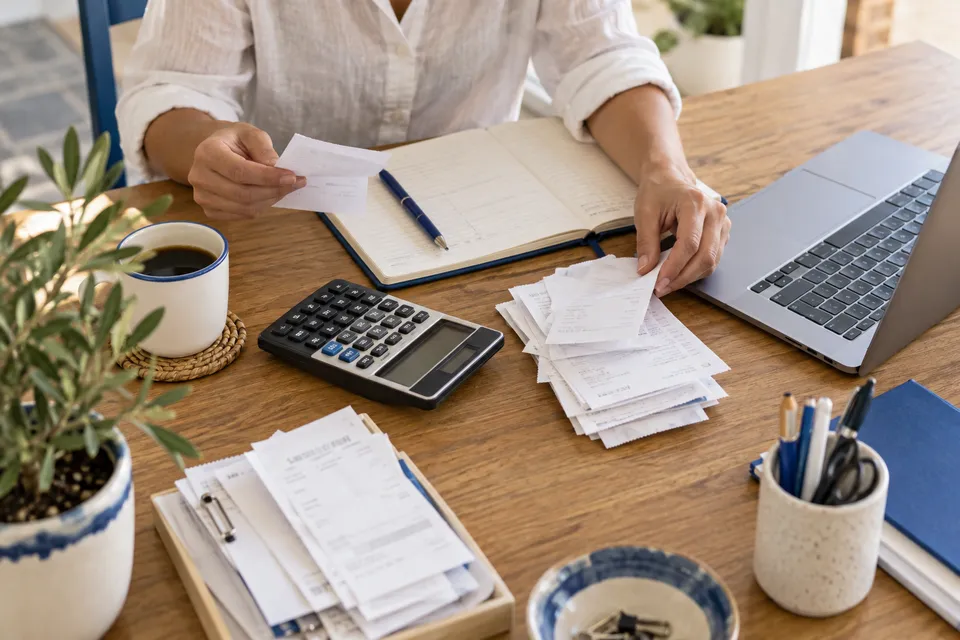
Spanish law sets two different retention periods, and you need to respect the longer one.
For tax purposes, the Agencia Tributaria can review your declarations for four years from the end of the filing period. Every document that supports a figure in your VAT or income tax returns (sales receipts, purchase invoices, bank statements, payroll) must be kept for at least that long. If a declaration is corrected or inspected, the clock restarts for that year.
For commercial purposes, the Código de Comercio requires companies to keep their accounting books and supporting documents for six years from the last entry. This applies to SLs; autónomos under the normal income tax regime are generally held to the four-year tax rule, but if in doubt, keep six.
What counts as a valid supporting document for a purchase is where small businesses lose money. A simple till receipt (ticket) from a supermarket or a supplier is enough to record the expense, but to deduct the VAT you need an invoice (factura) with your business name and NIF, or at least a simplified invoice that identifies you. For regular suppliers, ask once for invoices to be issued to the business; most will set it up and the difference over a year is real money.
On the form: you may keep documents on paper or digitally. The Agencia Tributaria accepts digitised copies of paper documents when the digitisation meets its requirements (certified software, or a system that guarantees the image is complete and unaltered). Photographing a receipt and storing it in a folder is fine as a working copy; whether you can then throw the paper away depends on how the image is stored, so ask your gestor before you do. Note also that thermal receipts fade within a year or two; a scan or photo taken the same day is the only way to still read them in year four.
What you need to do
- Keep everything that supports a tax figure for at least four years; six if you are an SL.
- Ask your regular suppliers for invoices in the business name so the VAT is deductible.
- Photograph or scan thermal receipts the day you receive them.
Sources
- Ley 58/2003, General Tributaria (BOE) ↗
- Código de Comercio (BOE) ↗
- Real Decreto 1619/2012 (BOE) ↗
- Agencia Tributaria · Sede electrónica ↗
References as given in the text: Ley 58/2003, General Tributaria, art. 66 to 70 (prescription); Código de Comercio, art. 30; Real Decreto 1619/2012 (invoicing obligations); Agencia Tributaria, conservación de facturas.
Related articles

Money
VAT at 4, 10 and 21 percent: what each rate means in a bar and in a shop
Three rates, dozens of edge cases, and a quarterly return that depends on getting each sale right. A plain guide for the two kinds of business that struggle most with it.
Updated · 1 October 2026
Rules
Verifactu: what changes for your till on 1 January 2027
From January, every company in Spain that sells to the public must issue its receipts from certified software. Here is what that means for a shop, bar or café in Marbella, in plain words.
Updated · 1 October 2026
Rules
Complaint forms in Andalucía: what every shop and bar must have on the counter
The hojas de reclamaciones are compulsory for almost every business that serves the public in Andalucía, and inspectors check for them. Here is the rule and how to comply in ten minutes.
Updated · 1 October 2026