
Verifactu: what changes for your till on 1 January 2027
From January, every company in Spain that sells to the public must issue its receipts from certified software. Here is what that means for a shop, bar or café in Marbella, in plain words.
Deadline: 1 January 2027 (companies) · 1 July 2027 (autónomos)
- Autor
- Editorial team
- Authorship to be confirmed
- Published:
- 1 October 2026
- Updated:
- 1 October 2026
- 2 min read
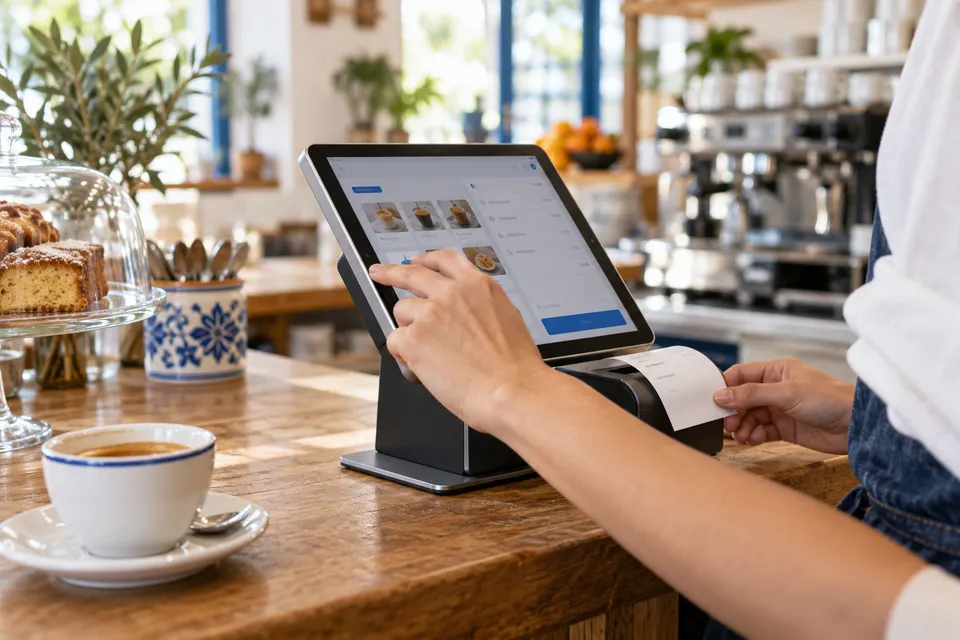
If you run a company (an SL or any other legal entity) and sell to the public, from 1 January 2027 every receipt you issue must come from software that meets the Verifactu rules. If you are autónomo, the same applies from 1 July 2027. The rule comes from Real Decreto 1007/2023 and the technical order that followed it; the dates were postponed once, in December 2025, and are now fixed.
What the law asks of your till is not complicated to understand. Each receipt must be digitally signed by the software. Each receipt must be linked to the previous one in a chain, so that deleting or altering a sale would break the chain and be visible. Each receipt must print a QR code that the customer, or an inspector, can scan to check it against Hacienda. And the software may, optionally, send every receipt to the Agencia Tributaria in real time; this is the "Veri*Factu" mode that gives the system its name, and it spares you from keeping the records yourself.
What does not comply is a long list: the old cash register with a paper roll, a spreadsheet, a handwritten ticket book, a bank card terminal used on its own, and any till software whose maker has not issued a signed statement (declaración responsable) that it meets the standard. If you are not sure which group you are in, the quickest test is to look at your last receipt: if there is no QR code, you are not ready.
The penalties are not symbolic. A business using non-compliant software can be fined up to 50,000 euros per year; a vendor selling it, up to 150,000 euros. Hacienda does not need to visit to notice: a chain with gaps shows up in the data.
Who is exempt: businesses already reporting through the SII system (in practice, turnover above 6 million euros) and businesses in the Basque Country and Navarra, which have their own systems. Almost every small business on the Costa del Sol is inside the rule.
What you need to do
- Look at your last receipt. No QR code means you need to act.
- Ask your till supplier, in writing, for their declaración responsable for Verifactu. No answer by the end of October means plan for a change.
- Make sure your business has a digital certificate, or that your gestor holds one for you; it is needed to activate the system.
Sources
- Real Decreto 1007/2023 (BOE) ↗
- Orden HAC/1177/2024 (BOE) ↗
- Agencia Tributaria · Verifactu ↗
- Real Decreto-ley de diciembre de 2025 (nuevas fechas) [check exact reference] (link pending)
References as given in the text: Real Decreto 1007/2023 (BOE); Orden HAC/1177/2024 (BOE); Agencia Tributaria, Verifactu information pages; Real Decreto-ley of December 2025 on the new dates [check exact reference].
Related articles

Rules
Complaint forms in Andalucía: what every shop and bar must have on the counter
The hojas de reclamaciones are compulsory for almost every business that serves the public in Andalucía, and inspectors check for them. Here is the rule and how to comply in ten minutes.
Updated · 1 October 2026

Rules
Allergens on your menu: the 14 you must declare and the simplest way to do it
Bars and restaurants must inform customers about allergens in every dish. The law is European, the inspections are local, and compliance is a one-afternoon job.
Updated · 1 October 2026
Digital
How to get a digital certificate in five steps (and why you will need it before January)
The digital certificate is the key to almost every official procedure in Spain, and it is required to activate a Verifactu till. Most businesses already have one without knowing it. Here is how to check and how to get one.
Updated · 1 October 2026