
Allergens on your menu: the 14 you must declare and the simplest way to do it
Bars and restaurants must inform customers about allergens in every dish. The law is European, the inspections are local, and compliance is a one-afternoon job.
- Autor
- Editorial team
- Authorship to be confirmed
- Published:
- 1 October 2026
- Updated:
- 1 October 2026
- 2 min read
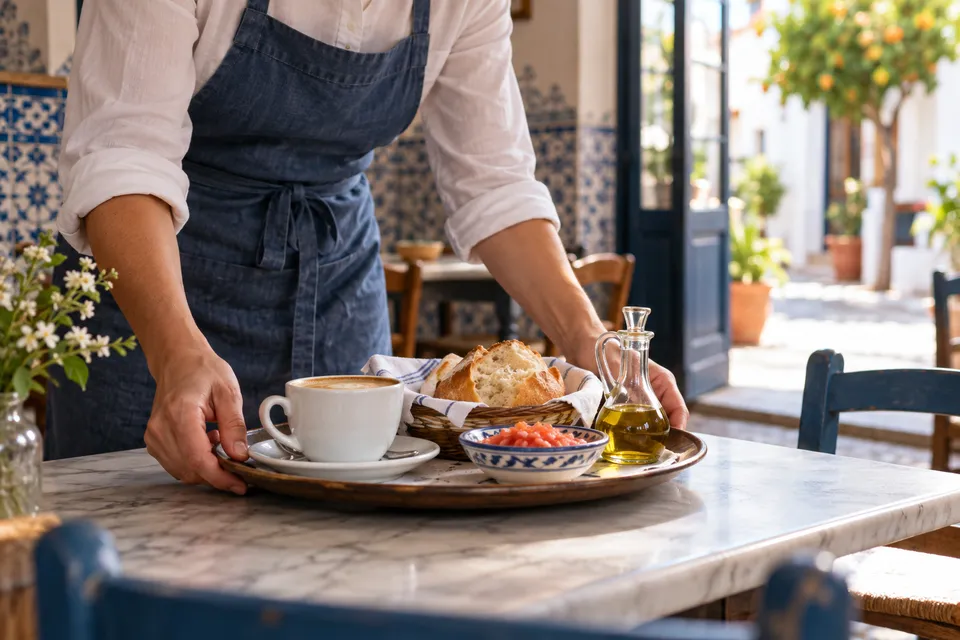
Since 2014, every food business in the EU must inform customers about the presence of 14 allergens in the food it serves. The rule is Regulation (EU) 1169/2011, applied in Spain through Real Decreto 126/2015. It covers restaurants, bars, cafés, takeaways and food shops selling unpackaged food, and it applies to every dish, including the daily menu and the tapa that comes with a drink.
The 14 allergens are: cereals containing gluten, crustaceans, eggs, fish, peanuts, soybeans, milk, nuts, celery, mustard, sesame, sulphur dioxide and sulphites, lupin, and molluscs.
The law does not force you to print them on the menu, although that is the most common solution. You may instead inform customers orally, but then you must have the information written down and available on the premises, and you must display a notice telling customers to ask. In practice, inspectors look for one of three things: allergen icons or letters next to each dish on the menu, an allergen chart available at the counter, or a clearly visible sign inviting customers to ask staff, backed by a written record in the kitchen.
The most robust approach for a small kitchen is a simple table: dishes down the side, the 14 allergens across the top, a mark where an allergen is present. Keep it in the kitchen, update it when a recipe or a supplier changes (a new brand of stock cube can add celery or gluten), and give the menu a small note: "Información sobre alérgenos disponible. Pregunte a nuestro personal."
Two common mistakes: forgetting cross-contamination (the fryer used for both calamari and chips means the chips may contain molluscs and gluten) and forgetting drinks (wine and beer contain sulphites and gluten respectively).
What you need to do
- List every dish and drink you serve and mark the 14 allergens in a table.
- Decide how you inform: icons on the menu, a chart at the counter, or a sign plus oral information.
- Review the table whenever a recipe or a supplier changes, and brief new staff on it.
Sources
References as given in the text: Regulation (EU) No 1169/2011; Real Decreto 126/2015 (BOE); AESAN (Agencia Española de Seguridad Alimentaria y Nutrición), allergen guidance for the hospitality sector.
Related articles
Rules
Verifactu: what changes for your till on 1 January 2027
From January, every company in Spain that sells to the public must issue its receipts from certified software. Here is what that means for a shop, bar or café in Marbella, in plain words.
Updated · 1 October 2026

Rules
Complaint forms in Andalucía: what every shop and bar must have on the counter
The hojas de reclamaciones are compulsory for almost every business that serves the public in Andalucía, and inspectors check for them. Here is the rule and how to comply in ten minutes.
Updated · 1 October 2026
Money
VAT at 4, 10 and 21 percent: what each rate means in a bar and in a shop
Three rates, dozens of edge cases, and a quarterly return that depends on getting each sale right. A plain guide for the two kinds of business that struggle most with it.
Updated · 1 October 2026